
West Chicago Previous Resident Sources
The trail for previous residents crosses county records and local history collections. Start with the source closest to the period being studied. Recent work usually begins with a parcel card. Older work may depend on an office deed book, a dated directory, a census page, or a map that explains where the old address stood.
| Historical source | Years covered | Where accessed | What it can show |
|---|---|---|---|
| Recorder property records | Office research from 1839; online name index from 1961 | DuPage Recorder portal or office | Parties, instruments, dates, legal description |
| DuPage directory | 1925–26 | Illinois Digital Archives | West Chicago and rural address clues |
| Haines criss-cross | 1988–2021 | Wheaton Public Library | Address-to-name snapshots |
| Telephone books | 1951–2016, mostly including West Chicago | Wheaton Public Library | Subscriber and address entries |
| Federal census schedules | 1790–1950 public | NARA and library databases | Households and neighborhood order |
| Sanborn map | April 1905, four sheets | Library of Congress | Building footprint and street context |
No row is a complete resident list. Use dates and roles to join them. The latest released federal census is 1950, and later schedules remain closed under the 72-year rule.
Anchor West Chicago House History
The DuPage Property Lookup gives a modern anchor: the PIN, situs address, legal description, current tax relationship, transfer history, and map links. A PIN is the county's parcel identification number. It is often more stable than a street string and can connect a current lot to recorded instruments.
Copy the PIN both with and without dashes. Note the tax year. Keep the situs address apart from the billing or mailing address. The billing name shows where the tax account is directed, not who slept in the building. Split and combine history can also matter because one modern parcel may not match an older lot.
Once the parcel is sound, the current transfer entry supplies a document number and recorded date. Those fields form the handoff to the Recorder and the first step toward previous residents.
Walk DuPage Deeds Backward
The DuPage Recorder search accepts last and first names, bank or trust names, subdivision or business terms, property address, PIN, document number, document group or type, and date bounds. Address searches begin in 1995, PIN searches in 1985, and computer name searches in 1961. Office property research reaches back to 1839.
- Open the current parcel card and copy its legal description, transfer date, parties, and document number.
- Find that instrument in the Recorder index and confirm the grantor, grantee, PIN, and instrument type.
- Search the grantor as an earlier grantee to locate the prior acquisition.
- Repeat the link while dates, parcel identity, and legal descriptions agree.
- For pre-index records or missing images, call Recorder Research or inspect the office books and plats.
- Grantor
- The party giving or conveying an interest.
- Grantee
- The party receiving that interest.
- Chain of title
- The linked sequence of recorded transfers for a parcel.
- Legal description
- The lot, block, subdivision, or land wording that identifies property apart from its street address.
A deed chain traces ownership interests, not occupancy. Mortgages, releases, easements, plats, liens, trusts, and transfer-on-death instruments describe different legal acts. Do not label each named party as a past resident.
Earlier West Chicago Property Records
Online indexed images begin in 1961 in the researched Recorder system. Plats reach into the 1800s, and office property research is reported from 1839. When the web index stops, record the last sound grantor, grantee, document number, legal description, and date before contacting the office.
The DuPage County Recorder is at 421 N County Farm Road in Wheaton. Recorder Research can be reached at 630-407-5401. Ask for the relevant deed book, plat, or recorded-document route instead of making a broad request for every name linked to an address.
The Recorder posted a portal migration effective August 14, 2026. A saved search link may age quickly, so preserve the office name and document identifiers as well as the URL. Those identifiers make a request durable even after a portal changes.
West Chicago Numbers Changed in 1930
A new building-number system and renamed streets took effect in West Chicago in 1930. That local change can break a direct address search. Earlier sources may also file the place under Junction, Turner, or Turner Junction, names tied to the railroad settlement before West Chicago became the city's name in 1896.
No official old-to-new address crosswalk was found. Match the legal description, subdivision, nearby landmarks, and map geometry instead. The 1905 Sanborn set, the 1925–26 directory, later telephone books, and today's parcel map can bridge the change. Preserve old spelling and abbreviations rather than replacing them with a modern guess.
The contrast between a printed address and a modern PIN is one of the most useful tests in previous-resident work. If the lot aligns but the number does not, the 1930 change may explain the difference.
West Chicago Households Between Years
Directories and census schedules add people who may not appear in the deed chain. The public 1925–26 DuPage County Directory explicitly includes West Chicago and a rural section. Its object has 1,188 pages, but page-level OCR was not exposed during research. Read the scan manually and capture the printed page, spelling, address, household continuation, job or role as printed, phone notation, and directory title.
Wheaton Public Library holds a 1924–25 DuPage directory, telephone books from 1951 through 2016 that mostly include West Chicago, and Haines criss-cross runs from 1988 through 2021. Most are non-circulating. The West Chicago Public Library offers HeritageQuest with card and PIN access, while Ancestry Library Edition is for in-library use.
- Choose the nearest directory year and transcribe the entry exactly.
- Check the closest released census year and note household order, ages, and address details.
- Compare the address against the parcel and the 1930 numbering change.
- Use a newspaper, yearbook, cemetery, or deed as an independent dated check.
Collection details and reading conventions are treated fully on the West Chicago city directory page. Here they serve one task: tracing a single address backward.
Local Help for West Chicago Research
The Wheaton Public Library local-history route brings directories, telephone books, census material, newspapers, yearbooks, cemetery indexes, vertical files, and specialist help into one research sequence.
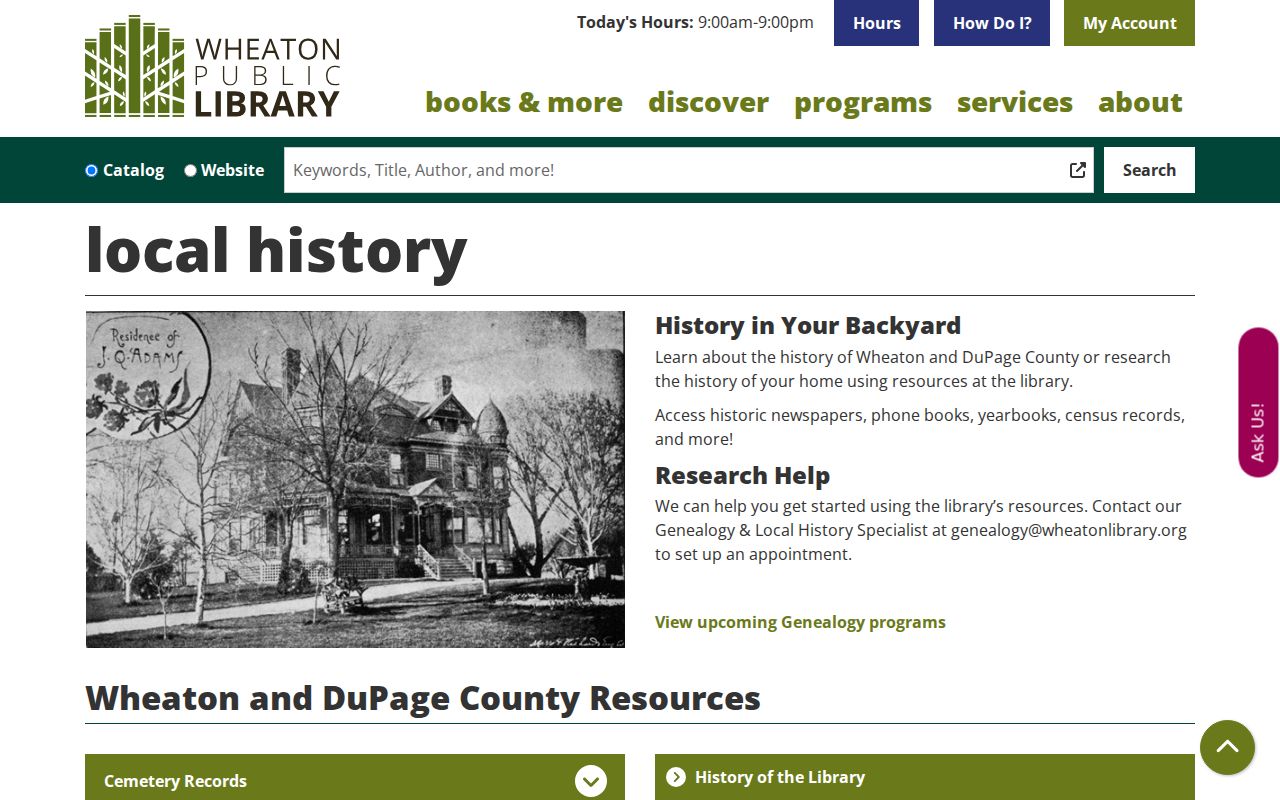
The captured page points to materials that often require a reference visit. Confirm the title, year, and availability before traveling because much of the local-history shelf does not circulate.
The West Chicago City Museum also offers photographs, letters, archive objects, and business items through a public CatalogIt collection. Its temporary location at 200 Main and appointment notice should be checked before a visit. A museum caption is a lead, not proof that a named person lived at the address.
Map West Chicago Past Residents
The four-sheet April 1905 Sanborn Fire Insurance Map shows street, building, and land-use context. It does not name households. Pair its footprints with a directory entry and a deed legal description. A factory, depot, church, school, or home drawn on the map may explain why later records use a work address, old street label, or rural notation.
The National Archives census research page provides the federal schedule route and explains access to released enumerations.
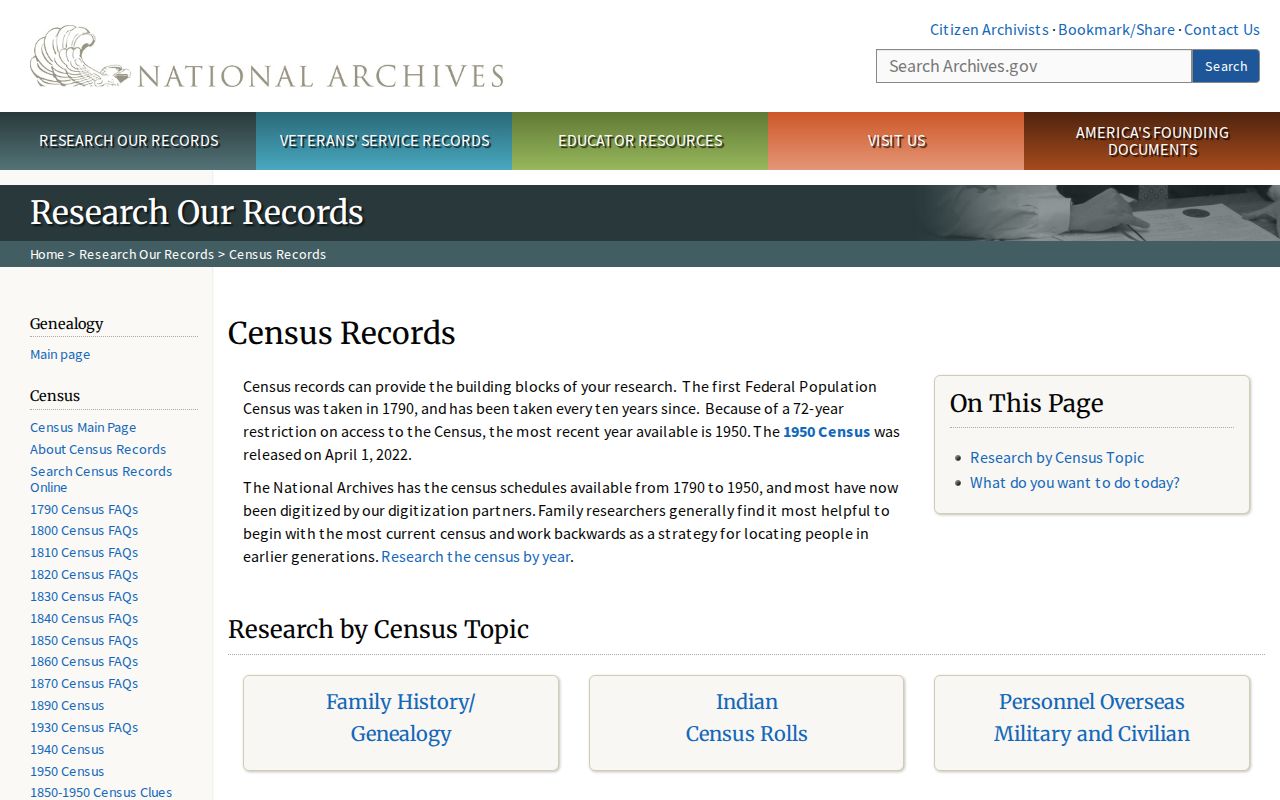
The census source can corroborate a household in a given year, but names, ages, and street order still need to be reconciled with the correct West Chicago geography.
After the household trail ends, the West Chicago cemetery app, local obituaries, probate files, and IRAD holdings may extend it. Glen Oak has more grave-level veteran information, while Oakwood is chiefly lot-level in the city's current description. A cemetery result marks an interment or lot relation, not a former residence.
Use Previous Resident Records Carefully
A strong result states exactly what each record supports. A parcel card shows a tax or land relationship. A deed shows a recorded interest. A directory is a dated published entry. A census records a household at one enumeration. A map gives physical context. A newspaper or museum caption supplies a lead that needs a second source.
Private details should not be copied just because they can be found. Illinois's Address Confidentiality Program can place a substitute address in new public records for eligible survivors, though it does not erase every older property record. Apparent protected addresses should not be reverse searched or republished.
Lawful house history. Research West Chicago previous residents for genealogy and property history. Never use the results to track, harass, or harm a living person.
When evidence conflicts, keep both citations and lower the confidence of the match. A dated, limited conclusion is more useful than a polished claim that the records do not prove.