
How the West Chicago Residents Directory Search Starts
A useful West Chicago residents directory search starts with the strongest fact already known. An exact address belongs in DuPage Property Lookup or the Parcel Viewer. A name connected with real estate belongs in the Recorder index. A registered voter can be checked through the county election lookup, subject to election-law limits. A historical name or old street number belongs in local directories, maps, newspapers, yearbooks, census schedules, or cemetery records.
No one source proves that a person lives at an address now. A parcel card can identify an owner or tax-bill recipient, while a deed identifies parties to a recorded transfer. Even a voter result is dated registration evidence. Treat each label as the source prints it, and seek a second record that matches the person, place, and relevant date.
- Normalize the name or address, including direction, suffix, unit, and ZIP.
- Use DuPage Property Lookup to connect the address with a parcel identification number.
- Check the Recorder index, voter lookup, or court index only for the role each source records.
- For an earlier household, compare the correct directory year with census, map, newspaper, and deed evidence.
- Ask the record custodian or file a focused Illinois FOIA request when the needed city file is not online.
Who Keeps West Chicago Resident Records
West Chicago is in DuPage County, so city and county offices divide the work. The Recorder preserves recorded instruments. County property systems connect street addresses with PINs, assessment fields, mailing contacts, maps, and transfers. The County Clerk handles marriage and death copies, while the Health Department also routes birth and death requests. Election records, Circuit Clerk cases, and municipal files each have separate search and access rules. For an address-led workflow, the West Chicago street directory guide explains the parcel chain in full.
DuPage County Recorder
421 N County Farm Road
Wheaton, IL 60187
630-407-5400
DuPage County Property Records
County administration campus
Wheaton, IL 60187
Search online by PIN or address
Read a West Chicago Parcel Card Without Guessing
DuPage Property Lookup accepts several routes into the same parcel record. An address is best when the spelling is current. A PIN is the stable key after the correct parcel is known. Billing-name search can find a tax contact, but that label should never be silently changed to resident or occupant. Map and Board of Review routes answer still different questions.
| Search route | Best use | Main caution |
|---|---|---|
| PIN | Open one known parcel | Confirm the digits before comparing records |
| Address | Move from a street string to a parcel | Use current spelling and numbering |
| Billing name | Find the named tax-mail recipient | A billing contact is not proof of occupancy |
| Map | Check parcel shape and nearby PINs | Parcel edges do not define a household |
| BOR hearings | Locate assessment-review material | Availability depends on the proceeding |
The live property search shows the available paths before a researcher commits to a name or address query. Open DuPage Property Lookup to see those choices.
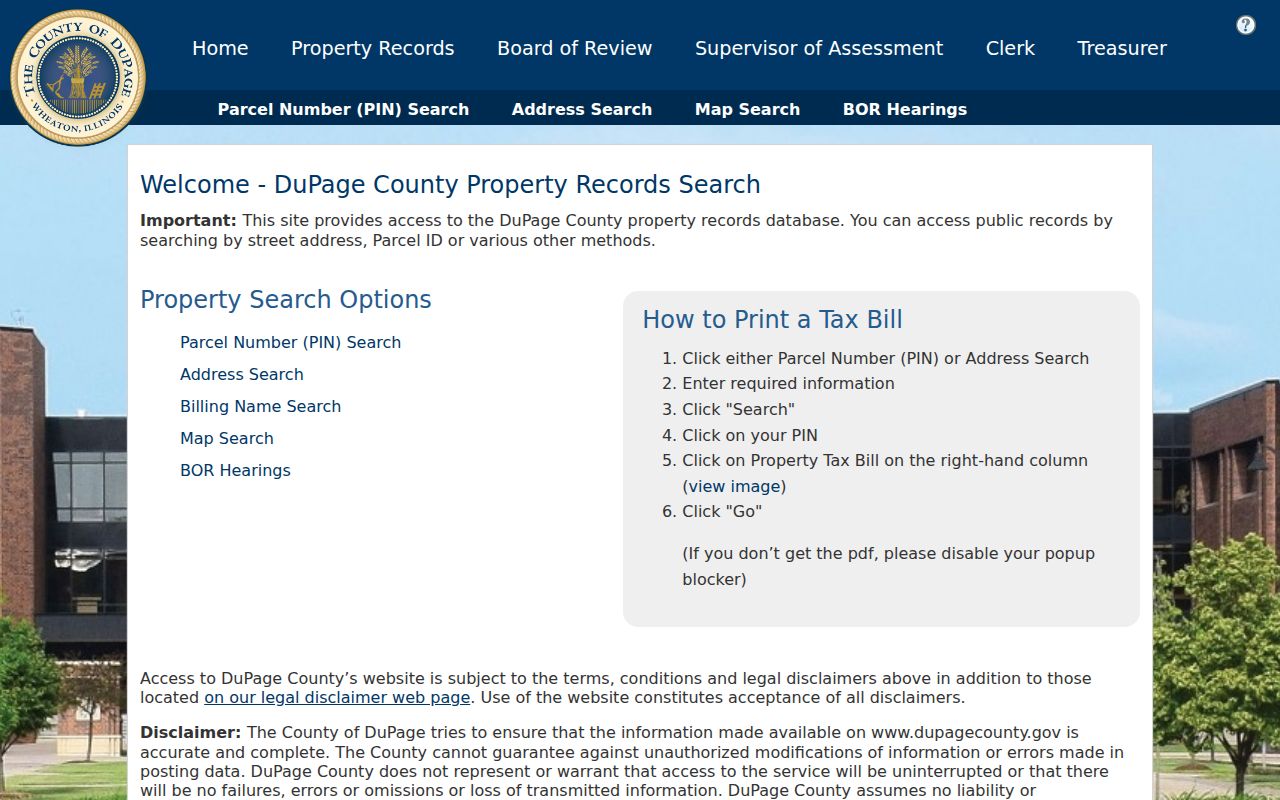
The screen helps keep a PIN search, an address search, and a billing-name search separate, which is central to a careful West Chicago residents directory result.
What the West Chicago Parcel Transfer Trail Adds
A parcel detail page can supply assessment, tax, legal-description, map, and transfer-history handoffs. Transfer rows are leads to recorded instruments, not a complete list of everyone who lived on the land. Use the document reference to move into the Recorder system, then read the grantor, grantee, execution date, recording date, and legal description together.
The distinction matters in West Chicago because a modern street number may not match an older instrument. A legal description and PIN can bridge changes that a plain address search misses. Trust and business names also need to remain in the exact role printed by the source.
A parcel is a mapped unit of land; a roll is an official list created for a government function; an index points to a record; and a criss-cross directory arranges entries by address or phone rather than only by surname.
The inspected sample DuPage parcel card shows how current fields lead into transfer research.
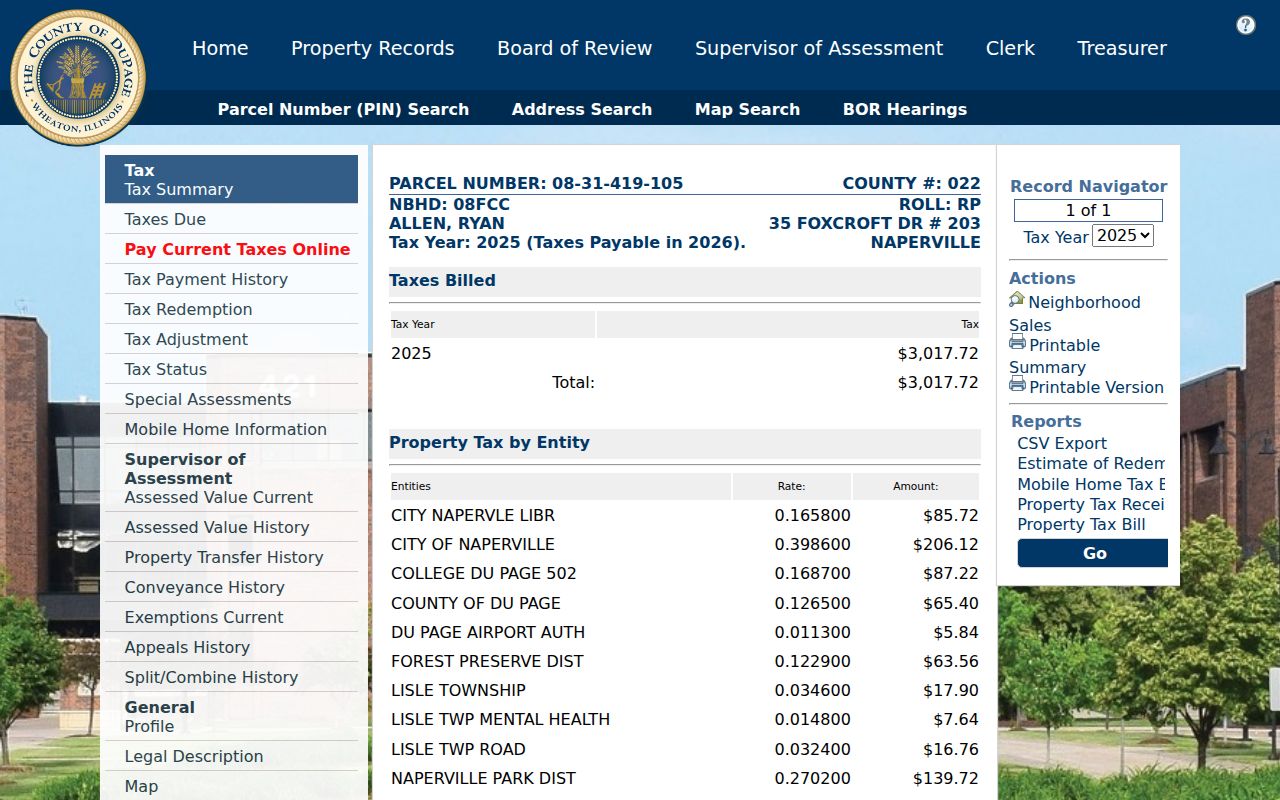
Its tabs and transfer handoff illustrate why the property card is a starting point and the recorded instrument is the next check.
Present-Day Sources in a West Chicago Residents Directory
Current official sources are narrower than their labels may suggest. They record ownership, a filing role, registration, custody status, professional licensing, an unclaimed-property name, or a municipal transaction. Their value comes from combining precise fields, not from treating each database as a general roster of West Chicago residents.
| Record set | Relationship shown | Custodian | Access note |
|---|---|---|---|
| Property Lookup | Owner or billing contact tied to a parcel | DuPage County | Free public portal |
| Voter lookup | Dated registration and election context | DuPage County | Lawful election use only |
| Recorder index | Parties to deeds, liens, plats, and other instruments | DuPage County Recorder | Public index; images may need another step |
| Circuit Clerk search | A named party and role in a case | DuPage Circuit Clerk | Public search may present an access challenge |
| City records | Permits, code, adjudication, or other municipal context | West Chicago | Online source or focused FOIA request |
The West Chicago resident lookup workflow shows how to test one name across these sources without merging unlike roles.
West Chicago Court and Voter Results Need Role Labels
The DuPage Circuit Clerk public portal covers trial-court categories such as civil, criminal, traffic, domestic-relations, chancery, and related records. A result can establish that a name appears as a case party, but it does not establish where the person lives. The public page can present Cloudflare Turnstile, while separate eAccess requires approval. Its terms also restrict bulk extraction and redistribution.
The county voter lookup is also a purpose-built tool, not a resident list. Use the identifying fields only for a lawful, noncommercial election purpose and respect what the display withholds. Registration status and district context are dated facts. They should be recorded with the search date and compared with another official source.
The official DuPage voter lookup shows the county's current search entry point and election-focused controls.
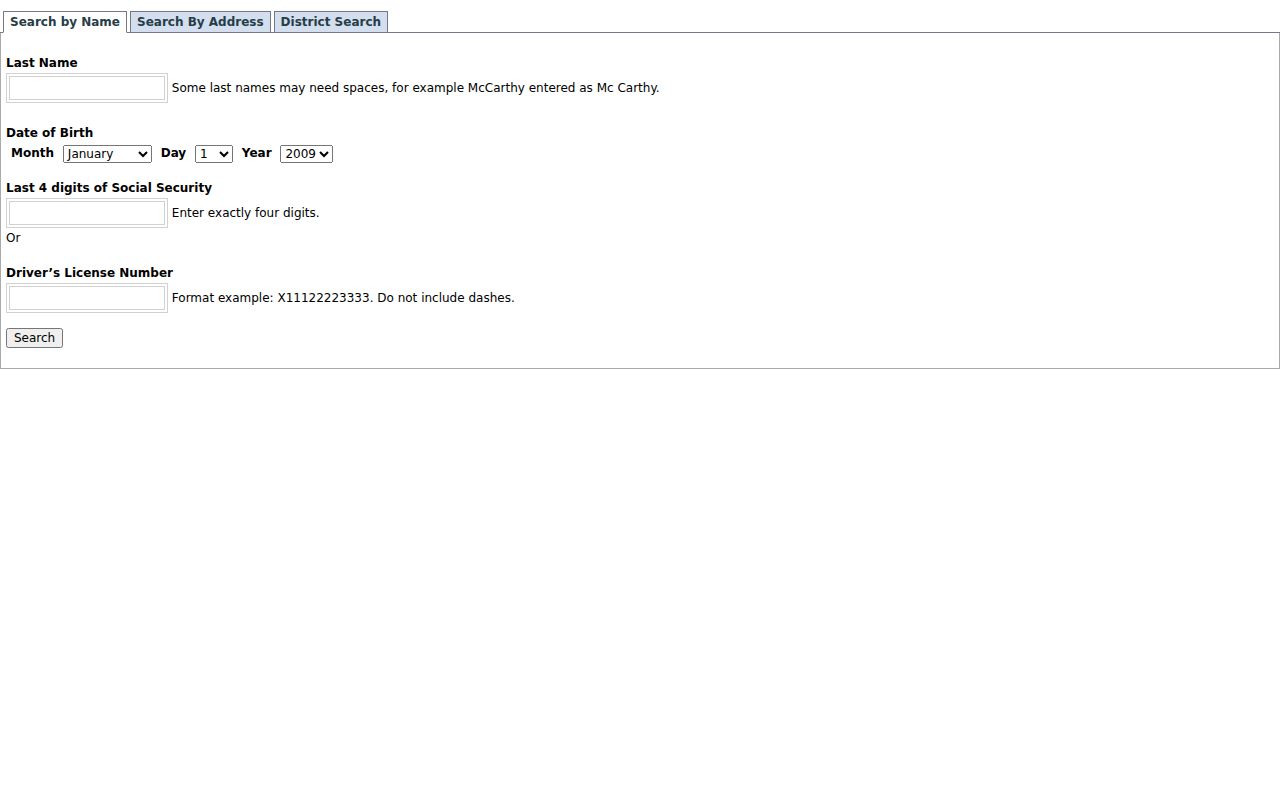
The screen belongs in a verification workflow only; it is not a downloadable neighborhood or resident roll.
The DuPage Circuit Clerk public search shows the official entry point and its access state.
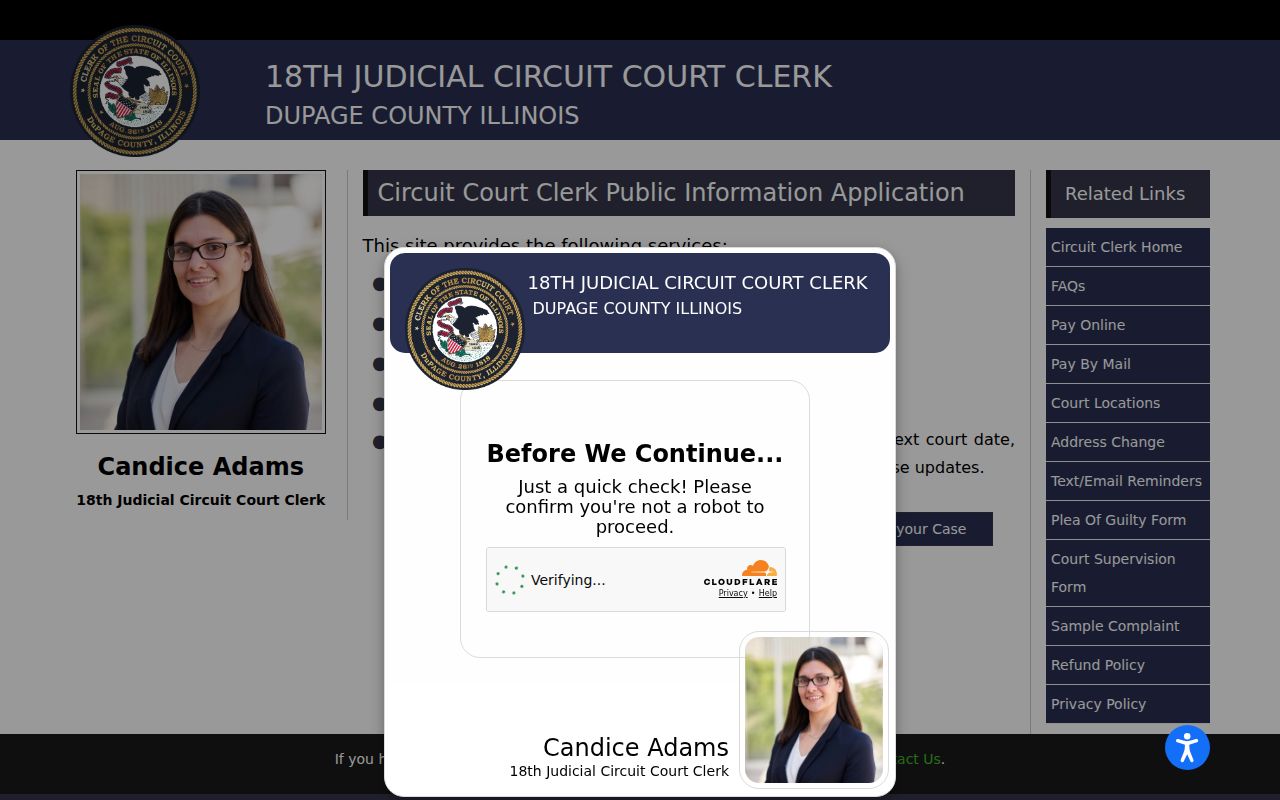
The captured screen is a reminder that a blocked live query is an access limitation, not permission to substitute an unsupported source.
West Chicago City Files Through Illinois FOIA
West Chicago maintains records that county portals do not, including municipal GIS material, permits, code-enforcement files, administrative-adjudication records, and cemetery information. Start with the department page or known record type. If the record is not posted, submit a focused request under the Illinois Freedom of Information Act, 5 ILCS 140, through the city portal.
A strong request names the address, date range, department, and document series. The city's March 2026 code-enforcement explainer is useful because it identifies complaint, inspection, notice, compliance, and adjudication stages. Those terms help the records officer locate the right file and reduce overbroad searching.
The West Chicago FOIA portal provides the request and status channel.
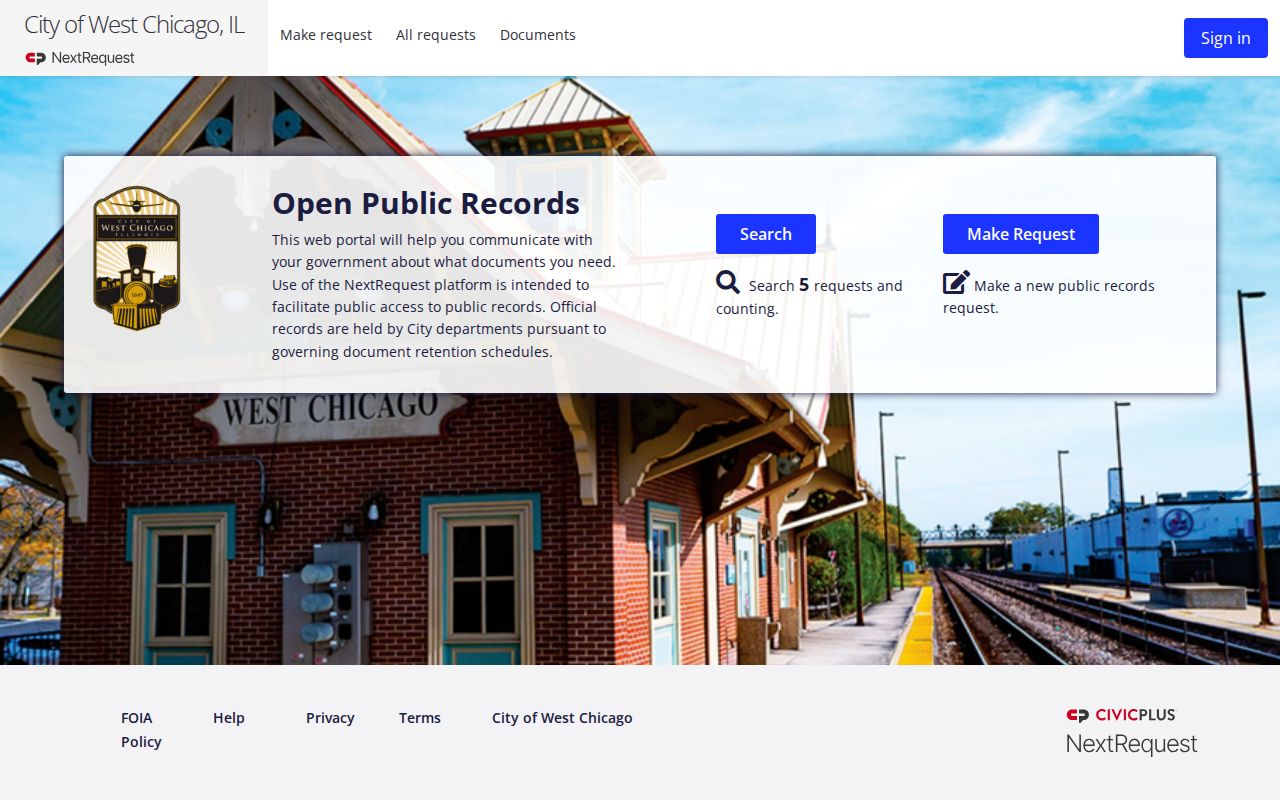
The portal complements county indexes because municipal records are organized by city function rather than by a universal resident name.
Private Tools Versus Official West Chicago Rolls
Commercial search tools may group names, phones, and addresses quickly, but their sources, update dates, and identity matching can be unclear. An official roll is slower and narrower, yet it tells the reader who keeps the record, why it exists, and what each field means. Neither category proves current occupancy by itself.
Official record route
Best for a dated, defined role such as parcel owner, recorded grantee, voter registration, license status, or case party. Verify through the named custodian.
Commercial category
Useful only as an unverified lead. Results may mix people with similar names, lag behind moves, or omit the source date.
Use records lawfully. Minimize personal data, honor protected addresses, and never use a West Chicago residents directory result to stalk, harass, intimidate, or harm anyone.
The 1930 West Chicago Address Break
West Chicago's address history creates a local trap that a modern search box cannot solve. The settlement was known as Junction, Turner, and Turner Junction before the West Chicago name took hold. In 1930 the city introduced renamed streets and a new numbering system. A directory entry, deed, newspaper notice, or Sanborn map made before that change may point to the right place with a street string that no longer works.
Use the 1905 four-sheet Sanborn map, the 1925-26 DuPage directory, later telephone books and Haines criss-cross runs, and current GIS as a chronology. When no crosswalk resolves the old number, contact City GIS or the City Clerk and ask for the renumbering or map series directly. The legal description and parcel chain may still bridge the old and new forms.
West Chicago Cemetery Records as Dated Evidence
The city's cemetery application is an unusual official name-search route. It covers Glen Oak and Oakwood, but the two collections do not have the same level of detail. Glen Oak includes more grave-level and veteran information, while Oakwood is described chiefly through lot-level data. A name found at lot level may identify a family or ownership connection without proving a specific interment.
Search partial and full surname forms, then preserve the cemetery code, lot identifier, grave, sequence, and record date exactly as displayed. Compare the result with an obituary, death record, directory, census entry, or deed before deciding that two similar names describe the same person. Certified death copies have statutory access limits, so the public cemetery map and the County Clerk request process should not be treated as interchangeable.
This source is especially useful when an older West Chicago household disappears from a directory or when a family name remains connected to a property after a move. It can supply a date and local relationship that directs the next search without exposing a living person's current address.
Record the Date When West Chicago Portals Change
Several official systems were moving during the research period. The Recorder landing page announced an August 14, 2026 transition to a new public portal. West Chicago also described a digital-modernization initiative and a move toward new government web addresses. A saved link or old instruction may therefore stop working even when the underlying record remains public.
Write down the portal name, exact URL, query fields, search date, and whether the result was a live record, an index entry, an image, or metadata only. If a public search presents a challenge page, times out, or moves, return to the custodian's main page and follow its current access notice. Do not fill the gap with a commercial result that hides its source.
The same discipline helps with fees and coverage. Recorder computer searches have different starting points for name, PIN, and address queries, while office property research reaches further back. West Chicago records may also sit with the city, DuPage County, Illinois agencies, a library, or an archive. A dated research note makes that custody trail reproducible after the web interface changes.
Historical Sources Behind the West Chicago Residents Directory
The historical shelf connects names with a particular year. The digitized 1925-26 DuPage directory expressly includes West Chicago and a rural section. West Chicago Public Library District offers genealogy resources, high-school yearbooks for 1921, 1923-32, and 1946-2023, plus student newspapers. The missing 1922 yearbook is a real coverage gap, not a reason to infer an entry.
Wheaton Public Library holds Haines criss-cross directories and telephone books that can bridge an address to a name in later decades. Many local-history items are non-circulating. The City Museum's public CatalogIt collection offers photographs, letters, business objects, and other leads, while names from captions should be checked against primary records. Census schedules through 1950, IRAD holdings, Recorder research, cemetery data, and newspapers supply the next layer.
Each source speaks a different record language. A directory may show a spouse, occupation, residence abbreviation, or phone. A map shows a structure rather than its household. A deed shows a legal transfer. Preserve the original wording and year, then reconcile the evidence. The detailed shelves and reading method appear in the West Chicago city directory section of the site navigation.